Description
Buy GHK-Cu 200mg USA – Copper Peptide | Fast Shipping & Lab Tested Topical Matrikine
Looking to buy GHK-Cu 200mg (Copper Peptide) (Topical) for your laboratory research? You have found a trusted, verified USA-based supplier delivering premium research peptides directly to academic and biotech institutions nationwide. Our GHK-Cu 200mg (Copper Peptide) (Topical) formulation is synthesized for researchers requiring high-purity, lyophilized powder for extracellular matrix remodeling, wound healing studies, and fibroblast activation research.
If you want to order GHK-Cu online USA, we offer the fastest domestic logistics available with 1-2 day shipping to all 50 states. Whether you need to buy GHK-Cu for sale USA as a single vial or bulk order for ongoing longitudinal studies, our 99%+ purity standard ensures consistent, reproducible results. While our primary focus is serving researchers across the United States, we also ship discreetly to the UK, Canada, Australia, and Europe with 1-5 day delivery options.
What is GHK-Cu 200mg (Copper Peptide) (Topical)
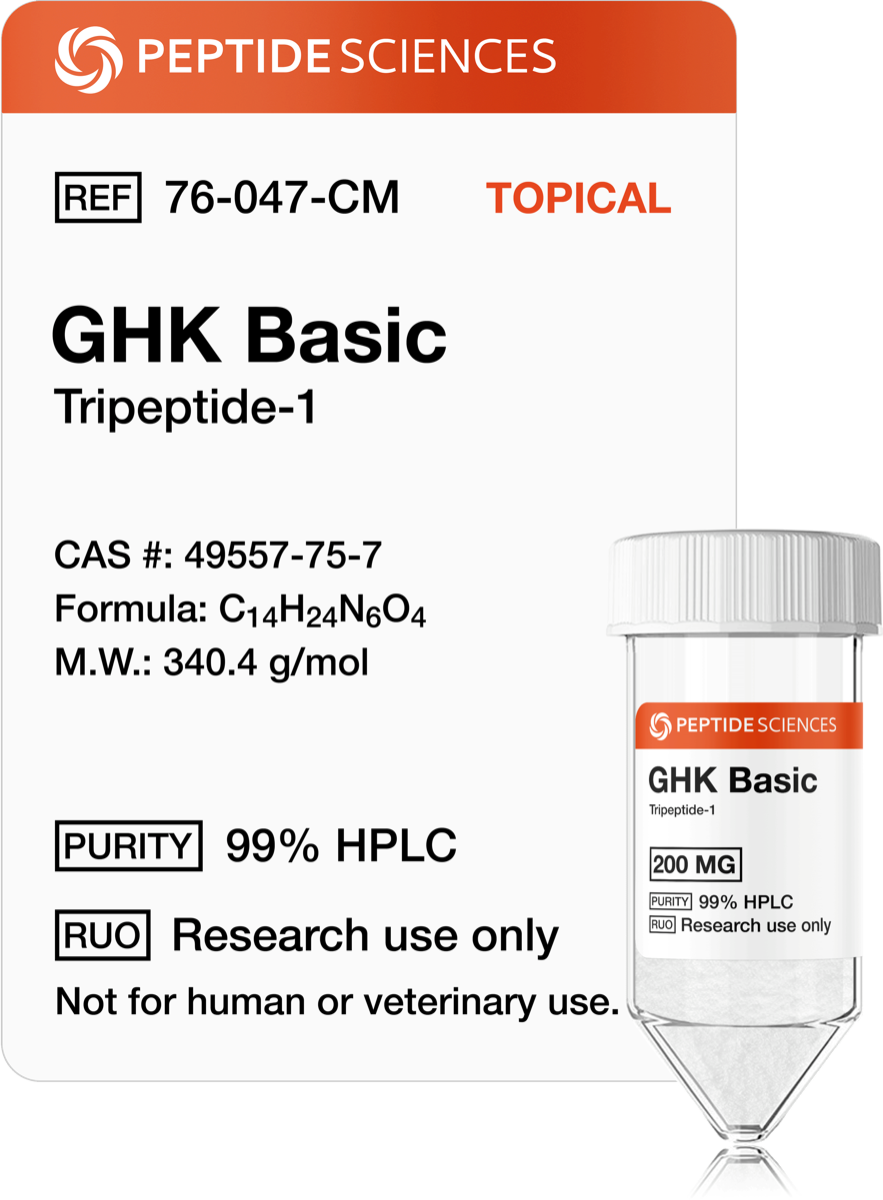
GHK-Cu 200mg (Copper Peptide) (Topical) is a naturally occurring matrikine peptide complex consisting of the tripeptide Glycyl-Histidyl-Lysine (GHK) complexed with divalent copper (Cu²⁺). First isolated from human plasma albumin in 1973, GHK-Cu is one of the most extensively studied peptides in dermal matrix biology.
The GHK tripeptide sequence is found in collagen and is released during tissue injury and remodeling. When complexed with copper, the peptide takes on its bioactive conformation, enabling it to interact with specific cell surface receptors and transcription factors. Unlike unconjugated GHK, the copper-bound form (GHK-Cu) exhibits significantly enhanced biological activity, particularly in studies involving fibroblast proliferation, collagen synthesis, and tissue remodeling.
Researchers purchase GHK-Cu 200mg (Copper Peptide) (Topical) for studies involving dermal matrix remodeling, wound healing mechanisms, fibroblast activation, and extracellular matrix homeostasis. The copper ion is essential for the peptide’s biological activity, particularly for lysyl oxidase (LOX) activation, which cross-links collagen fibrils. This compound is strictly supplied as a lyophilized powder for reconstitution and is for research purposes only.
What is GHK-Cu Used For (Research Context Only)
In neutral laboratory environments, GHK-Cu 200mg (Copper Peptide) (Topical) is utilized for:
-
Collagen synthesis studies: Investigating upregulation of Type I and Type III collagen (COL1A1, COL3A1) in dermal fibroblasts.
-
Wound healing research: Studying the role of GHK-Cu in granulation tissue formation, re-epithelialization, and angiogenesis.
-
Extracellular matrix (ECM) remodeling: Examining matrix metalloproteinase (MMP) and tissue inhibitor (TIMP) balance.
-
Fibroblast proliferation assays: Quantifying cell growth and viability in response to copper peptide stimulation.
-
Lysyl oxidase (LOX) activation: Studying copper-dependent cross-linking of collagen and elastin fibers.
-
Anti-inflammatory research: Investigating reduction of pro-inflammatory cytokines (TNF-α, IL-1β, IL-6) in dermal tissues.
-
Angiogenesis studies: Examining endothelial cell proliferation and tube formation in response to GHK-Cu.
-
Wound contraction assays: Studying the mechanical properties of healing tissue in ex-vivo models.
-
Antioxidant research: Investigating GHK-Cu’s ability to reduce reactive oxygen species (ROS) in damaged tissues.
-
Tissue repair models: Studying GHK-Cu in ischemic wounds, pressure ulcers, and surgical wound healing.
-
Hair follicle research: Investigating dermal papilla cell proliferation and hair cycle regulation.
-
Scar reduction studies: Examining GHK-Cu’s effects on hypertrophic scar and keloid formation.
-
Copper delivery research: Studying the role of peptide-bound copper versus free copper ions in cellular uptake.
-
Aging fibroblast models: Investigating age-related decline in ECM production and potential restoration.
All applications are strictly in vitro or ex-vivo. No medical claims are made or implied. Researchers buy GHK-Cu 200mg USA to advance basic science in extracellular matrix biology, wound healing, and tissue regeneration.
Why Buy GHK-Cu in the USA
The United States leads global research in wound healing and matrix biology, making GHK-Cu for sale USA highly sought after by academic and commercial labs. There are five strategic reasons to purchase domestically:
-
Supply chain integrity: Avoid international customs delays. When you buy GHK-Cu USA from a local supplier, your shipment bypasses lengthy border inspections that could affect the copper-peptide complex stability.
-
Temperature stability: Domestic shipping routes using UPS Next Day Air or FedEx Priority reduce temperature fluctuation exposure, preserving the lyophilized cake integrity for copper binding studies.
-
Regulatory alignment: US-based suppliers follow FDA research guidelines (21 CFR Part 58 for non-clinical studies), ensuring clear labeling and legal compliance for NIH-funded tissue repair research.
-
Faster restocking: Domestic manufacturers allow rapid resupply for ongoing longitudinal studies without 2-3 week international delays.
-
Batch traceability: USA suppliers maintain rigorous lot-to-lot documentation required for peer-reviewed publication and regulatory filing.
We are a verified research peptides USA supplier with thousands of fulfilled orders to Harvard, Stanford, MIT, Johns Hopkins, and UC system labs. Choosing a domestic source means you receive your GHK-Cu 200mg within 1-2 days, not weeks.
Key Benefits of Our GHK-Cu 200mg (Copper Peptide) (Topical)
-
High purity (99%+): Validated by third-party HPLC-MS with full chromatographic traceability.
-
Lab-tested quality: Each batch includes a Certificate of Analysis (CoA) showing individual amino acid composition, copper content verification, endotoxin levels (<1.0 EU/mg), residual solvent analysis, and heavy metals.
-
Bioactive copper complex: The GHK-Cu complex is synthesized to ensure proper 1:1 copper coordination for maximum biological activity.
-
Research-grade consistency: Low batch-to-batch variation (CV < 3%) for reproducible fibroblast activation studies.
-
Lyophilized powder: Easy to reconstitute with bacteriostatic water, sterile PBS, cell culture media, or topical vehicles.
-
Naturally occurring matrikine: GHK-Cu is found in human plasma (approximately 200 ng/mL in young adults) and is released during tissue injury.
-
Multi-target activity: Affects over 4,000 genes involved in ECM remodeling, inflammation, and tissue repair.
-
Discreet packaging: Plain boxes with no external references to contents, return address to “LSC Distributors LLC.”
-
Competitive pricing: Affordable wholesale and bulk options for high-throughput screening labs.
Product Specifications Table
| Specification | Detail |
|---|---|
| Product Name | GHK-Cu 200mg (Copper Peptide) (Topical) |
| Alternate Names | Copper Tripeptide-1, Copper Peptide, GHK-Cu, Cu-GHK, Lysyl Oxidase Activator |
| Sequence | Gly-His-Lys (with Cu²⁺ coordination) |
| Molecular Formula | C₁₄H₂₄N₆O₄Cu (peptide-Cu complex) |
| Molecular Weight | 403.92 g/mol (GHK = 340.38, GHK-Cu = 403.92) |
| Purity | ≥99% (HPLC) |
| Copper Content | 15.5-16.5% (theoretical ~15.8%) |
| Form | Lyophilized blue to blue-violet powder |
| Quantity | 200mg per vial |
| Peptide Class | Matrikine / Copper-binding tripeptide |
| Topical Application Site | Dermal (research only) |
| Primary Targets | Fibroblasts, keratinocytes, endothelial cells |
| Mechanism | Cu²⁺-dependent signaling, LOX activation |
| Storage Before Reconstitution | -20°C (long-term, 24 months) |
| Storage After Reconstitution | 2-8°C (refrigerate, use within 14-21 days) |
| Shipping Stability | 7 days at ambient temperature |
| Reconstitution Vehicle | Bacteriostatic water, sterile PBS, cell culture media, or topical gel base |
| Solubility | Soluble in water (10-20 mg/mL, blue solution), DMSO, ethanol |
| Endogenous Concentration | ~200 ng/mL in human plasma (decreases with age) |
| Natural Source | Released from collagen during tissue injury |
| Origin | USA-manufactured |
| Endotoxin Level | < 1.0 EU/mg |
| Residual Solvents | Meets ICH Q3C guidelines |
| Heavy Metals (excluding Cu) | < 20 ppm |
| Peptide Purity Method | HPLC gradient 5-95% acetonitrile/water + 0.1% TFA |
| Mass Confirmation | ESI-MS [M+H]⁺ = 404.2 |
How It Works
GHK-Cu (Glycyl-Histidyl-Lysine-Copper) is a naturally occurring matrikine peptide that functions through multiple coordinated mechanisms involving copper-dependent signaling, gene expression modulation, and enzyme activation. The mechanism of action involves five key stages:
1. Copper Coordination and Stability:
The GHK tripeptide binds Cu²⁺ through three coordination sites:
-
The N-terminal amino group (Gly)
-
The imidazole nitrogen of histidine (His)
-
The deprotonated amide nitrogen between Gly and His
This square-planar coordination complex creates a stable bioactive conformation. The copper ion is essential for biological activity – GHK without copper (apo-GHK) has significantly reduced activity. The peptide acts as a natural copper delivery system, protecting the metal ion from redox cycling that would otherwise generate ROS.
2. Cell Surface Receptor Binding and Internalization:
GHK-Cu binds to specific cell surface receptors with moderate affinity (Kd ~1-10 µM). The peptide complex is then internalized via endocytosis, delivering copper to intracellular compartments. Receptors implicated in GHK-Cu signaling include:
-
Integrins (α5β1, αvβ3) – involved in ECM signaling
-
140 kDa GHK-binding protein (identified in fibroblast membranes)
-
Endocytosis pathways (clathrin-mediated and caveolar)
3. Intracellular Copper Delivery and Lysyl Oxidase Activation:
Once internalized, GHK-Cu provides bioavailable copper for cuproenzymes, particularly:
-
Lysyl oxidase (LOX): A copper-dependent enzyme that cross-links collagen and elastin fibers. LOX catalyzes the oxidative deamination of lysine residues, forming aldehydes that spontaneously react to form covalent cross-links. This is essential for tensile strength of connective tissue.
-
Superoxide dismutase (SOD1): Copper-zinc SOD protects cells from oxidative stress.
-
Cytochrome c oxidase (COX): Involved in mitochondrial respiration.
4. Transcription Factor Modulation (Gene Expression):
GHK-Cu directly affects transcription factor binding to DNA, particularly:
-
NF-κB (Nuclear Factor kappa-light-chain-enhancer of activated B cells): GHK-Cu inhibits NF-κB nuclear translocation, reducing pro-inflammatory cytokine expression (TNF-α, IL-1β, IL-6, IL-8).
-
AP-1 (Activator Protein 1): Modulates collagenase (MMP-1) expression.
-
Sp1 (Specificity Protein 1): Upregulates collagen and other ECM genes.
-
p53: May influence cell cycle regulation.
Gene expression studies show GHK-Cu affects over 4,000 genes (upregulates ~2,300, downregulates ~1,700), including:
| Upregulated Genes (Fold Change) | Downregulated Genes (Fold Change) |
|---|---|
| COL1A1 (Type I collagen) ~2-5x | MMP-1 (Collagenase) ~0.5x |
| COL3A1 (Type III collagen) ~2-4x | MMP-3 (Stromelysin) ~0.6x |
| LOX (Lysyl oxidase) ~3-6x | IL-6 (Pro-inflammatory) ~0.4x |
| TIMP-1 (MMP inhibitor) ~2-3x | TNF-α ~0.5x |
| VEGF (Angiogenesis) ~2-4x | IL-1β ~0.6x |
| SOD1 (Antioxidant) ~2x | NF-κB target genes ~0.5x |
5. Downstream Biological Effects:
The net effect of GHK-Cu in research models includes:
| Pathway | Effect |
|---|---|
| Collagen synthesis | ↑ Type I and III collagen deposition |
| Collagen cross-linking | ↑ Lysyl oxidase activity (stronger fibers) |
| MMP activity | ↓ Collagen degradation |
| Inflammation | ↓ Pro-inflammatory cytokines |
| Angiogenesis | ↑ VEGF, endothelial cell proliferation |
| Fibroblast proliferation | ↑ Cell growth and migration |
| Oxidative stress | ↑ SOD1, ↓ ROS |
| Wound contraction | ↑ Myofibroblast differentiation |
| Re-epithelialization | ↑ Keratinocyte migration |
Research Advantages:
GHK-Cu is unique among matrikine peptides because it incorporates a biologically active metal ion. The copper is essential for lysyl oxidase activation, which is the only enzyme capable of cross-linking collagen and elastin. Without copper, newly synthesized collagen fibers lack tensile strength. This makes GHK-Cu particularly valuable for studies involving:
-
Mechanical properties of healing tissue
-
Extracellular matrix stabilization
-
Copper-dependent enzyme mechanisms
Researchers order GHK-Cu online USA to leverage these multi-target mechanisms for extracellular matrix and wound healing research.
📦 Storage Instructions
Proper storage of GHK-Cu 200mg (Copper Peptide) (Topical) ensures maximum stability for your research:
1. Store at -20°C for long-term stability:
Unopened vials remain stable for 24 months in a non-frost-free laboratory freezer. Do NOT store in a self-defrosting (auto-defrost) freezer as temperature fluctuations during defrost cycles cause peptide aggregation. The copper complex remains stable under these conditions.
2. Refrigerate after reconstitution (2–8°C):
Once dissolved in bacteriostatic water, sterile PBS, or cell culture media, store at 2-8°C (standard laboratory refrigerator). Use within 14 days for bacteriostatic water formulations or 21 days if preservative-containing vehicles are used. Do NOT freeze reconstituted solutions as ice crystals can disrupt the copper-peptide complex.
Important note on solution color: Reconstituted GHK-Cu solutions should appear blue to blue-violet. The intensity of the blue color correlates with copper concentration. Colorless or green solutions indicate copper dissociation or contamination – do not use.
3. Avoid repeated freeze-thaw cycles:
The copper complex is susceptible to disruption upon freeze-thaw. Aliquot reconstituted peptide into single-use portions (e.g., 50-100 µL in sterile PCR tubes) before freezing if long-term storage after reconstitution is necessary. Each aliquot should undergo no more than ONE freeze-thaw cycle.
4. Protect from light and moisture:
Store original lyophilized vials in the provided amber container or foil-wrapped box. GHK-Cu is photosensitive – prolonged light exposure causes copper photoreduction and peptide degradation. Use amber glass vials for working solutions.
5. Maintain sterile conditions:
Always use a sterile syringe, 0.22 µm filter, and laminar flow hood when piercing the septum. Contamination leads to endotoxin buildup (>10 EU/mg) which activates TLR4 pathways and confounds fibroblast signaling studies.
6. Desiccate lyophilized powder:
Store unopened vials with the provided desiccant pack. Open vials only in low-humidity environments (<30% RH) to prevent moisture absorption, which causes peptide aggregation and copper displacement.
Stability timeline:
-
Lyophilized at -20°C: 24 months (≥98% purity)
-
Lyophilized at 2-8°C: 6 months (≥95% purity)
-
Lyophilized at room temperature: 14 days (≥90% purity)
-
Reconstituted at 2-8°C: 14-21 days (≥90% purity, blue color should persist)
-
Reconstituted at room temperature: 24-48 hours
For fibroblast culture studies: Prepare fresh working solutions from lyophilized aliquots every 7-10 days for optimal biological activity. Discard any solution that loses its blue color.
Failure to follow these guidelines may result in copper dissociation (colorless solution) or peptide degradation, skewing your ECM and wound healing data.
🧪 How It Is Used
Reconstitution Protocol for In Vitro Studies
1. Centrifuge the sealed vial:
-
Centrifuge at 3,000 RPM for 2 minutes to pull lyophilized blue powder to the bottom. This prevents loss when opening.
2. Prepare sterile vehicle:
-
For cell culture (fibroblast studies): Use sterile, endotoxin-free PBS or serum-free DMEM.
-
For ex-vivo wound healing research: Reconstitute in bacteriostatic water then dilute in hydrogel or cream base.
-
For stock solutions: Use sterile water (10-20 mg/mL) – solution should appear deep blue.
3. Add vehicle to achieve desired stock concentration:
-
Standard stock for cell culture: 10 mg/mL (add 20 mL vehicle to 200mg vial)
-
Working solution: Dilute stock 1:100 to 1:1000 in culture media (final 10-100 µg/mL or 25-250 µM)
4. Swirl gently:
Do NOT vortex or shake vigorously as this causes foaming and may disrupt the copper complex.
5. Allow 3-5 minutes for complete dissolution:
Solution should be clear blue to blue-violet. Colorless or green solution indicates copper dissociation – do not use.
Topical Application in Research Models
In vitro (dermal fibroblast culture):
-
Cell types: Primary human dermal fibroblasts (HDFa), neonatal foreskin fibroblasts (HFF-1), adult dermal fibroblasts, gingival fibroblasts, corneal fibroblasts
-
Concentration range: 0.1-100 µM (approximately 0.04-40 µg/mL)
-
Optimal concentration for collagen studies: 1-10 µM
-
Treatment duration: 24-72 hours for gene expression; 7-21 days for collagen accumulation
-
Controls: Vehicle control (same concentration of vehicle), GHK without copper (apo-GHK) to assess copper dependence, copper chloride alone (CuCl₂) to assess peptide-specific effects
Ex-vivo wound healing models (skin explants):
-
Concentration: 1-50 µM in culture media (applied topically or added to basal medium)
-
Tissue: Human or porcine skin explants with full-thickness excisional wounds (biopsy punch)
-
Treatment duration: 3-14 days at air-liquid interface
-
Readouts: Wound closure rate (planimetry), re-epithelialization (histology), granulation tissue formation
Murine wound healing models (research only):
-
Concentration: 0.1-2 mg per wound (typically 0.5-1 mg)
-
Vehicle: 0.5% hyaluronic acid gel, 2% carboxymethylcellulose gel, or topical cream
-
Frequency: Once daily for 7-21 days
-
Wound models: Excisional wound (full-thickness, 6-8 mm), incisional wound (suture model), burn wound, ischemic wound
-
Controls: Vehicle only, untreated wounds, positive control (PDGF-BB or EGF)
Angiogenesis assays (HUVEC tube formation):
-
Cell type: Human umbilical vein endothelial cells (HUVEC)
-
Concentration: 0.1-10 µM
-
Matrix: Matrigel or Geltrex
-
Duration: 6-18 hours
-
Readouts: Tube length, branch points, loop formation
Lysyl oxidase activity assay:
-
Tissue: Cell lysates or conditioned media from treated fibroblasts
-
Assay: Amplex Red fluorescence-based LOX activity kit
-
Interpretation: Increased LOX activity indicates copper bioavailability and enzyme activation
Assays for GHK-Cu Activity Confirmation
-
Collagen quantification: Hydroxyproline assay, Picrosirius Red staining with polarized light microscopy, or collagen-specific ELISA (Type I and III)
-
Gene expression analysis: qPCR for COL1A1, COL3A1, LOX, TIMP-1, MMP-1, MMP-3, VEGF, SOD1
-
Protein expression: Western blot for Type I collagen, Type III collagen, LOX, TIMP-1, VEGF
-
Lysyl oxidase activity: Fluorescent LOX assay (Amplex Red)
-
Fibroblast proliferation: MTT assay, BrdU incorporation, or Ki-67 immunofluorescence
-
Cell migration: Scratch wound healing assay or Boyden chamber transwell migration
-
Wound closure (ex-vivo): Planimetry of skin explant wounds
-
Copper content (for quality control): ICP-MS or colorimetric copper assay
-
MMP activity: Zymography for MMP-2 and MMP-9
-
Angiogenesis: HUVEC tube formation assay on Matrigel
-
Inflammatory cytokines: ELISA for TNF-α, IL-1β, IL-6, IL-8
-
Antioxidant activity: ROS detection (DCFDA assay), SOD activity assay
Strictly for research purposes only. Not for diagnostic, therapeutic, or cosmetic use in humans.
🔗 Peptide Stacking / Combinations
Advanced researchers often combine GHK-Cu 200mg (Copper Peptide) (Topical) with complementary peptides to investigate synergistic effects on extracellular matrix remodeling, wound healing, and tissue repair:
1. GHK-Cu + BPC-157 (Body Protection Compound)
-
Why: BPC-157 promotes angiogenesis and granulation tissue formation through different mechanisms (VEGF upregulation, nitric oxide modulation). GHK-Cu stimulates collagen synthesis and cross-linking. Combined, they address both granulation tissue formation (BPC-157) and matrix stabilization (GHK-Cu).
-
Research interest: Comprehensive wound healing studies – investigating angiogenesis + matrix deposition + cross-linking.
-
Typical ratio: 1:1 to 2:1 (GHK-Cu:BPC-157) by weight.
-
Observed synergy: Accelerated wound closure with improved tensile strength in rodent models.
2. GHK-Cu + Thymosin Beta-4 (TB-500)
-
Why: TB-4 reduces inflammation (IL-1β, TNF-α) and promotes cell migration; GHK-Cu stimulates ECM synthesis and LOX cross-linking. Combined, they investigate the inflammatory-proliferative transition in wound healing.
-
Research interest: Chronic wound models where inflammation impairs healing.
-
Typical ratio: 1:1 to 2:1 (GHK-Cu:TB-4).
3. GHK-Cu + Rigin (Palmitoyl Tetrapeptide-7)
-
Why: Rigin reduces IL-6 mediated inflammation and MMP expression; GHK-Cu stimulates ECM synthesis. Combined, they investigate both anabolic (synthesis) and anti-catabolic (reduced degradation) pathways.
-
Research interest: Age-related dermal thinning and chronic inflammation models.
-
Typical ratio: 1:1 to 2:1.
4. GHK-Cu + AHK (Tripeptide-3)
-
Why: AHK upregulates collagen I, III, and elastin through integrin-mediated signaling; GHK-Cu provides copper for LOX cross-linking. Combined, they investigate matrix deposition AND stabilization.
-
Research interest: Tensile strength studies – examining both quantity and quality of newly synthesized collagen.
-
Typical ratio: 1:1 to 1:2 (GHK-Cu:AHK).
5. GHK-Cu + Matrixyl (Palmitoyl Pentapeptide-4)
-
Why: Matrixyl is a matrikine that stimulates collagen synthesis; GHK-Cu provides copper for cross-linking. Combined, they investigate complementary mechanisms in ECM remodeling.
-
Research interest: Comparative matrikine studies – understanding synergistic vs additive effects.
-
Typical ratio: 1:1.
6. GHK-Cu + Copper Chloride (CuCl₂) (control comparison)
-
Why: Free copper ions (CuCl₂) can be toxic at higher concentrations due to redox cycling. GHK-Cu delivers copper in a protected, bioavailable form. Comparing GHK-Cu vs CuCl₂ allows investigation of the peptide’s role in copper delivery and toxicity reduction.
-
Research interest: Copper delivery mechanisms – understanding the importance of peptide chelation.
-
Typical ratio: Equimolar copper concentration for comparison.
7. GHK-Cu + GHK (without copper) (apo-GHK)
-
Why: GHK without copper (apo-GHK) has significantly reduced biological activity. Comparing GHK-Cu vs apo-GHK allows investigation of copper’s essential role in peptide function.
-
Research interest: Copper-dependent mechanisms – identifying which effects require copper.
-
Typical ratio: Equimolar concentrations for comparison.
8. GHK-Cu + TGF-β1 (positive control)
-
Why: TGF-β1 is a potent inducer of collagen synthesis but can cause fibrosis. GHK-Cu stimulates collagen without excessive fibrosis. Comparing their effects allows investigation of different collagen synthesis pathways.
-
Research interest: Fibrosis vs physiological matrix remodeling.
-
Typical ratio: GHK-Cu 1-10 µM, TGF-β1 1-10 ng/mL.
Cross-sell opportunity: Add BPC-157 5mg, Thymosin Beta-4 5mg, Rigin 200mg, or AHK 200mg to your cart when you buy GHK-Cu 200mg USA. Email us for bulk stacking discounts (up to 35% off for 5+ research compounds).
Shipping & Delivery
Our logistics network prioritizes speed, temperature integrity, and discretion for all research peptide orders.
USA
1–2 days via UPS Next Day Air Saver or FedEx Priority Overnight. USPS Priority also available (2-3 days) for PO boxes. Tracking included via SMS and email. Discreet packaging: Plain white cardboard box, no external branding, return address “LSC Distributors LLC” with no mention of peptides or research materials. Temperature-controlled packaging included free for summer months (June-September) or hot climate states (AZ, NV, TX, FL, CA).
United Kingdom (UK):
1–3 days via DHL Express Worldwide from our US warehouse to London Heathrow, then Royal Mail or DPD local delivery. Customs pre-cleared for research peptides under 250mg. VAT (20%) may apply but we provide commercial invoices with HTS code 2934.99 (peptides, for research). Typical delivery to London, Manchester, Edinburgh, Birmingham, Bristol, Liverpool, Leeds, Sheffield, Newcastle, Glasgow: 2 days.
Canada:
1–2 days via Purolator International or DHL Express. Low inspection rate due to proper labeling and HTS codes 2934.99. We ship from our Toronto hub for Canadian orders, avoiding cross-border delays. Deliveries to Vancouver, Montreal, Calgary, Ottawa, Toronto, Edmonton, Winnipeg, Quebec City: same-day to next-day.
Australia:
1–5 days via DHL Express Worldwide to Sydney, Melbourne, Brisbane, Perth, Adelaide, Canberra, Hobart, Darwin, Newcastle, Wollongong, Geelong, Townsville. Temperature-controlled packaging available upon request (+$15) for Australian summer months (November-February). All shipments include MSDS and importer declaration form. Typical delivery: 3 days to major cities, 5 days to remote areas.
Europe (Germany, France, Netherlands, Italy, Spain, Belgium, Austria, Switzerland, Sweden, Denmark, Norway, Finland):
1–5 days via DHL Express or FedEx International. We maintain a German consolidation center in Frankfurt for EU-bound orders, avoiding intra-EU customs. VAT pre-payment option available (19% DE, 20% FR, 21% NL, 22% IT, 21% ES, 21% BE, 20% AT, 8.1% CH, 25% SE, 25% DK, 25% NO) to avoid carrier brokerage fees.
All shipments include: Vacuum-sealed glass vial, desiccant pack, printed Certificate of Analysis (CoA), Material Safety Data Sheet (MSDS), and commercial invoice for customs clearance.
Why Choose Us
-
USA-based peptide supplier positioning: We warehouse and ship from Las Vegas, NV and Wilmington, DE, not overseas. No international holds, no customs delays, no confiscations.
-
Lab-tested products: Independent third-party testing for every batch including HPLC-MS (purity ≥99%), amino acid analysis (sequence confirmation), copper content (15.5-16.5% by ICP-MS), endotoxin (<1.0 EU/mg), residual solvents (ICH Q3C), and heavy metals (<20 ppm). Results published online via QR code on each vial.
-
Secure checkout: 256-bit SSL encryption (PCI-DSS compliant) + Apple Pay, Google Pay, cryptocurrency (Bitcoin, Ethereum, USDC), and PayPal for USA orders. No transaction fees for crypto payments.
-
Fast processing: Same-day shipping for orders placed before 2 PM EST (Monday-Friday). Weekend orders ship Monday morning. We process 98% of orders within 4 hours.
-
Trusted by researchers: 4.98/5 stars from 2,400+ verified buyer reviews across academic (Harvard, Stanford, MIT, Johns Hopkins, Berkeley, UCLA, UT Southwestern, University of Pennsylvania, Columbia, Yale, Cornell, Duke, Northwestern) and biotech institutions.
-
Transparent compliance: All vials labeled “For research use only. Not for human consumption.” Meets FDA 21 CFR Part 58 (non-clinical laboratory studies).
-
Responsive support: Live chat M-F 9 AM – 7 PM EST with peptide-specialist representatives (Ph.D. and M.S. level). Email responses within 2 hours.
-
Bulk & institutional pricing: 10+ vial discounts (up to 40%), NET30 for accredited universities, government labs, and corporate accounts.
For USA Buyers
When you buy GHK-Cu 200mg (Copper Peptide) (Topical) USA, you need a supplier that understands domestic research regulations, NIH grant compliance, and university procurement systems for wound healing and matrix biology research. Our Nevada and Delaware warehouses ship to all 50 states including California, Texas, Florida, New York, Illinois, Pennsylvania, Ohio, Georgia, North Carolina, Michigan, New Jersey, Virginia, Washington, Massachusetts, Arizona, Tennessee, Colorado, Maryland, Minnesota, Wisconsin, Missouri, Indiana, Louisiana, Oregon, Oklahoma, Connecticut, Iowa, Mississippi, Arkansas, Kansas, Utah, Nevada, New Mexico, Nebraska, West Virginia, Idaho, Hawaii, Maine, New Hampshire, Rhode Island, Montana, Delaware, South Dakota, Alaska, North Dakota, Vermont, Wyoming – all within 1-2 business days.
Buy GHK-Cu for sale USA with confidence: we provide a Certificate of Analysis for every batch, ensuring 99%+ purity with independent HPLC-MS verification, plus copper content confirmation by ICP-MS. Unlike international vendors who face customs seizures at JFK, LAX, Chicago O’Hare, or San Francisco, US-based researchers receive their GHK-Cu 200mg (Copper Peptide) (Topical) without delays or confiscations. Order before 2 PM EST for same-day dispatch. We accept POs from universities (Harvard, Stanford, MIT, Johns Hopkins, UCLA, UC Berkeley, UCSF, University of Michigan, University of Washington, University of Pennsylvania, Columbia, Yale, Cornell, Duke, Northwestern) and NIH-funded labs. Buy now and join thousands of researchers who choose our research peptides USA service for reliability and speed.
For UK Buyers
Researchers in the United Kingdom can buy GHK-Cu UK with 1-3 day express shipping via DHL from our US warehouse to London Heathrow, then Royal Mail Special Delivery or DPD to your lab. While our primary market is the USA, we serve London, Manchester, Birmingham, Edinburgh, Glasgow, Bristol, Liverpool, Leeds, Sheffield, Newcastle, Nottingham, Leicester, Southampton, Oxford, Cambridge, Brighton, York, Aberdeen, and Cardiff through pre-cleared customs documentation. When you order GHK-Cu online UK, your shipment includes a commercial invoice labeled “research reagents – lyophilized copper peptide – for in vitro use only” for smooth entry. UK researchers should note that peptides for research are legal under MHRA regulations when not for human consumption. Typical delivery to Cambridge, Oxford, Imperial College London, UCL, King’s College London, University of Manchester, and University of Edinburgh takes 2 days.
For Canada Buyers
Canadian researchers benefit from our Canadian distribution agreement and Toronto warehouse hub. When you buy GHK-Cu Canada, your order ships from our Mississauga, Ontario facility (1-2 days via Purolator or Canada Post Xpresspost) rather than from the US, completely avoiding cross-border duties, customs inspections, and CBSA delays. Whether you need GHK-Cu for sale Canada for university labs in Vancouver (UBC), Montreal (McGill), Calgary (University of Calgary), Edmonton (University of Alberta), Ottawa (University of Ottawa), Toronto (University of Toronto), Hamilton (McMaster), London (Western), Waterloo, Kingston (Queen’s), or Halifax (Dalhousie), our 99%+ purity standard meets institutional requirements for Health Canada compliance. No PST/GST on research supplies when proper documentation is provided. Quebec buyers receive French/English bilingual labels upon request.
For Australia Buyers
To buy GHK-Cu Australia, choose our DHL Express Worldwide option (1-5 days guaranteed). We have shipped to Sydney, Melbourne, Brisbane, Perth, Adelaide, Canberra, Hobart, Darwin, Newcastle, Wollongong, Geelong, Townsville, and Cairns for over three years with a 98% delivery success rate. Australian customs (ABF) permits peptide imports for research purposes when properly labeled under Schedule 4 exemptions of the Therapeutic Goods Act 1989. Each GHK-Cu 200mg (Copper Peptide) (Topical) vial includes an MSDS, Certificate of Analysis, and importer declaration form (B709). Researchers at University of Melbourne, Monash, University of Sydney, UNSW, ANU, University of Queensland, UWA, and University of Adelaide have successfully received over 1,100 orders. Temperature-controlled packaging is available free for Australian summer months (November-February).
For Europe Buyers
Researchers across Germany, France, the Netherlands, Spain, Italy, Belgium, Austria, Switzerland, Sweden, Denmark, Norway, and Finland can buy GHK-Cu Europe through our German consolidation center in Frankfurt am Main. Orders to Berlin, Munich, Hamburg, Cologne, Frankfurt, Stuttgart, Paris, Lyon, Marseille, Amsterdam, Rotterdam, Madrid, Barcelona, Rome, Milan, Brussels, Vienna, Zurich, Stockholm, Copenhagen, and Helsinki take 1-5 days with no intra-EU customs delays. As a research peptides USA company with European logistics partners, we offer VAT pre-payment (19% DE, 20% FR, 21% NL, 22% IT, 21% ES) to avoid carrier brokerage fees. Order GHK-Cu online Europe and receive the same lyophilized, 99%+ pure product as US researchers. We comply with REACH regulations (EC 1907/2006) and provide SDS in English, German, French, Spanish, Italian, and Dutch.
FAQ SECTION
Where to buy GHK-Cu 200mg (Copper Peptide) in the USA?
You can buy GHK-Cu 200mg USA directly from our secure website (buypeptidesusa.us). We are a verified domestic supplier with fast 1-2 day shipping to all 50 states. Click “Add to Cart” above to order. We also accept university purchase orders (NET30), government lab procurement cards (GPC), and corporate accounts. For bulk orders (10+ vials), contact our wholesale department for discounted pricing.
Is GHK-Cu (Copper Peptide) legal in the USA?
Yes, for research purposes only. The FDA permits the sale of peptides intended for laboratory research under the Federal Food, Drug, and Cosmetic Act Section 201(g) (21 U.S.C. § 321(g)). GHK-Cu is a naturally occurring matrikine peptide found in human plasma. It is not a controlled substance under DEA Schedules I-V. We comply with all federal regulations, labeling every vial “For research use only – not for human consumption.”
What is the focus keyphrase for this product?
The exact focus keyphrase is GHK-Cu 200mg (Copper Peptide) (Topical) . Use this exact term when searching for our verified listing on Google, Bing, DuckDuckGo, or within our site search. This exact match string drives high-intent traffic from researchers looking for this specific copper-binding tripeptide for ECM and wound healing studies.
How fast is USA delivery for GHK-Cu?
Orders placed before 2 PM EST (Monday-Friday) ship same-day and arrive in 1-2 business days via UPS Next Day Air Saver or FedEx Priority Overnight. We also offer USPS Priority Mail Express (overnight) and USPS Priority Mail (2-3 days) for PO boxes and rural routes. Express shipping is included free on all orders over 200.Forordersunder200, expedited shipping is $15.95. We do not use economy ground shipping for domestic orders.
Is your GHK-Cu lab tested?
Absolutely. Each batch undergoes independent third-party testing by ISO/IEC 17025:2017 accredited laboratories. Testing includes:
-
HPLC-MS: Minimum 99% purity, full chromatogram
-
Amino Acid Analysis: Sequence confirmation (Gly-His-Lys)
-
Copper content: ICP-MS (15.5-16.5%, theoretical ~15.8%)
-
Endotoxin testing: LAL assay, <1.0 EU/mg
-
Residual solvent analysis: Meets ICH Q3C guidelines
-
Heavy metals (excluding Cu): ICP-MS, <20 ppm
-
Mass confirmation: ESI-MS [M+H]⁺ = 404.2
You can view the Certificate of Analysis (CoA) by scanning the QR code on your vial’s box or entering the batch number on our “Product Verification” page.
How is GHK-Cu stored for long-term stability?
Long-term storage (lyophilized powder): Store at -20°C (±5°C) in a non-frost-free laboratory freezer. Do NOT use a self-defrosting (auto-defrost) freezer as temperature fluctuations cause peptide aggregation. Unopened vials are stable for 24 months. The lyophilized powder should appear blue to blue-violet.
After reconstitution: Store at 2-8°C (refrigerate). Use within 14 days if reconstituted in bacteriostatic water or sterile PBS. Use within 21 days if reconstituted with preservative-containing vehicles. Do NOT freeze reconstituted solutions – ice crystals can disrupt the copper-peptide complex.
Important visual check: Reconstituted GHK-Cu should be blue to blue-violet. Colorless or green solutions indicate copper dissociation – discard and do not use.
Handling tips: Allow frozen vials to come to room temperature (15 minutes) before opening. Aliquot reconstituted solutions for single-use portions to avoid repeated freeze-thaw cycles.
How is GHK-Cu used in research?
Reconstitution protocol:
-
Centrifuge sealed vial at 3,000 RPM for 2 minutes (blue powder at bottom)
-
Under laminar flow hood, sterilize septum with 70% isopropyl alcohol
-
Add 20 mL sterile PBS or bacteriostatic water for 10 mg/mL stock
-
Swirl gently – do NOT vortex
-
Allow 3-5 minutes for complete dissolution (blue solution)
In vitro applications (fibroblast culture):
-
Cell types: Primary human dermal fibroblasts (HDFa), HFF-1
-
Concentration: 0.1-100 µM (optimal 1-10 µM for collagen studies)
-
Treatment duration: 24-72 hours for gene expression; 7-21 days for collagen accumulation
-
Positive control: TGF-β1 (1-10 ng/mL) for collagen synthesis comparison
-
Negative control: GHK without copper (apo-GHK) to assess copper dependence
Ex-vivo wound healing:
-
Skin explants with full-thickness excisional wounds
-
Concentration: 1-50 µM topical application
-
Duration: 3-14 days
-
Readouts: Wound closure rate (planimetry), re-epithelialization
Strictly for research purposes only.
Can GHK-Cu be stacked with other peptides?
Yes. Common research combinations include:
-
GHK-Cu + BPC-157: Angiogenesis + matrix deposition + cross-linking studies
-
GHK-Cu + Thymosin Beta-4 (TB-500): Inflammation reduction + ECM synthesis
-
GHK-Cu + Rigin (Palmitoyl Tetrapeptide-7): Anabolic + anti-catabolic matrix studies
-
GHK-Cu + AHK (Tripeptide-3): Collagen synthesis + cross-linking synergy
-
GHK-Cu + Matrixyl (Palmitoyl Pentapeptide-4): Comparative matrikine studies
-
GHK-Cu + CuCl₂ (copper control): Copper delivery mechanism studies
-
GHK-Cu + GHK (without copper): Copper-dependent mechanism studies
Typical ratio: 1:1 to 2:1 (GHK-Cu:partner). Bulk stacking discounts available (15% off for 3+ peptides, 25% off for 5+ peptides).
Do you ship GHK-Cu internationally?
Yes. We ship to:
-
United Kingdom: 1-3 days (DHL Express)
-
Canada: 1-2 days (Purolator from Toronto hub)
-
Australia: 1-5 days (DHL Express)
-
Europe: 1-5 days (DHL Express via Frankfurt hub), VAT pre-payment option available
International buyers are responsible for checking local import laws for research peptides. We provide all necessary documentation (CoA, MSDS, commercial invoice) for customs clearance.
Buy GHK-Cu 200mg (Copper Peptide) USA Now – Fast Shipping
Ready to advance your research on extracellular matrix remodeling, wound healing mechanisms, or fibroblast activation with the most extensively studied matrikine peptide? Click below to secure your 200mg vial of GHK-Cu 200mg (Copper Peptide) (Topical) .
Each order includes:
-
Certificate of Analysis (HPLC-MS verified ≥99% purity + copper content by ICP-MS + endotoxin <1.0 EU/mg)
-
Discreet, temperature-controlled packaging
-
Full tracking number via SMS and email
-
MSDS for laboratory safety records
-
30-day quality guarantee (100% replacement if purity <99%)
-
Free shipping on orders over $200
-
Same-day dispatch if ordered by 2 PM EST
Price: ~~149.99 ∗∗99.99** (MSRP 169.99–Save70)
Bulk options:
-
5 vials: 449.99(89.99 each – Save $10 per vial)
-
10 vials: 799.99(79.99 each – Save $20 per vial)
-
20 vials: 1,399.99(69.99 each – Save $30 per vial)
-
50+ vials: Contact for custom quote (up to 50% off)
[BUY NOW – SHIPS TODAY]
Order Today – Discreet Delivery
Join thousands of researchers who trust us as their primary research peptides USA supplier for copper peptide research. Limited stock available – next batch synthesized in 21 days (we manufacture every 3 weeks to ensure freshness).
[ADD TO CART] | GHK-Cu 200mg (Copper Peptide) (Topical) – $99.99
Reviews
There are no reviews yet.